Innovations
Industrial Advantages and Applications of Valves:
What are valves in a pipeline system?
Each pipeline process involves the flow of various liquids, gases, and slurries.
In these pipeline and plumbing systems, valves are mechanical equipment responsible for regulating and controlling the flow of liquids, gases, or slurries moving in different directions.
These valves used to control water flow in pipes are important for controlling the speed, direction, and pressure of liquids.
They are used in various business sectors including commercial, residential and industrial areas, as well as oil and gas, water treatment, manufacturing, pharmaceuticals and other sectors.
Different types of industrial valves: applications and advantages
1. Butterfly (throttling) valves: despite some limitations in control accuracy, the main function of butterfly valves is flow regulation.
Turning the handle 90 degrees makes them easy to use.
A characteristic feature of these valves is a metal disc positioned perpendicular to the flow when closed.
They allow the fluid flow to be changed through partial rotation.
Butterfly valves can be operated manually, hand-actuated, or in pneumatic modes.
Advantages:
• In industrial environments, butterfly valves are popular due to their high precision, reliability, and low maintenance requirements.
• They are capable of effectively controlling flow.
• There is no need to interrupt the pipeline for installation or removal of the system.
Applications of butterfly valves: the type of fluid that can be used depends on the material — ranging from chemically neutral liquids such as water and oil to slurries, food products, and pharmaceutical fluids.
Some butterfly valves are also specifically designed to handle corrosive fluids.
However, solid particles in fluids may prevent the butterfly valve from closing completely, so they should be avoided.
2. Globe valves
One of the most commonly used types of valves in various applications is the globe valve.
These valves use linear motion for flow modulation, similar to gate valves.
Their main function is to regulate pipeline flow, which is achieved by moving a disk (or plug) toward a fixed ring seat.
Globe valves have a lower tendency to leak compared to other valve types, which is a significant advantage.
Advantages:
• Globe valves have faster opening and closing speeds and excel in flow regulation due to their good shut-off capability.
• The seat surface is easier to clean.
• They can be modified to function as stop-check valves.
• They provide effective shut-off performance.
Applications of globe valves: these valves are ideal for controlling fluid depending on pipeline pressure.
In many globe valve actuators, the opening adjustment can vary with pressure due to a regulating spring.
The main function of globe valves is throttling.
They can be considered universal flow controllers used in high-temperature conditions.
3. Ball valves
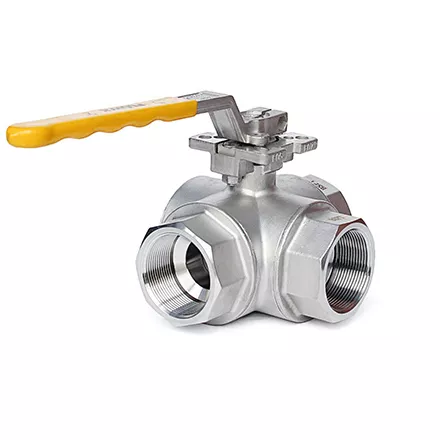
Ball valves, as the name suggests, use a ball to regulate the flow of fluid from one opening to another.
To control the passage of gas or liquid, these valves allow the opening to be fully open, closed, or partially open.
Ball valves are the best choice for use with gases due to their high strength and durability.
Advantages:
• Thanks to their compact design that requires no lubrication or maintenance, they are among the most convenient valve types.
• One of the main drawbacks is their weak gas throttling capability, which can lead to rapid seat wear.
Applications of ball valves: they are designed to regulate flow, pressure, and shut-off of corrosive fluids, slurries, ordinary liquids, and gases.
Their use extends beyond the oil and gas industry to manufacturing, chemical storage, and residential systems.
4. Check valves
A check valve is also known as a non-return valve.
It allows fluid to flow in only one direction and prevents backflow of the medium.
Check valves are used to prevent reverse flow in a system, which could damage equipment or disrupt the process.
Advantages:
• They prevent backflow.
• They can withstand pressure and act as a safety mechanism.
Applications of check valves: due to their simple design and wide range of material options, they are used in many industries.
They help maintain pressure and prevent backflow.
Check valves are widely used in manufacturing, wastewater treatment systems, petrochemicals, chemical industries, oil production, water systems, steam systems, oil refining, and viscous fluids.
Choosing the right valves
Above is a list of the main types of industrial valves and their applications.
However, before selection, it is necessary to consider parameters such as pressure, temperature, size, diameter, and other criteria that vary depending on the type and application.
As valve suppliers at Enermus.com, we recommend purchasing from trusted suppliers like us, as we have the required experience, knowledge, and solutions for all your pipeline requirements.
Partners