Innovations
How does the natural gas pipeline distribution system work?
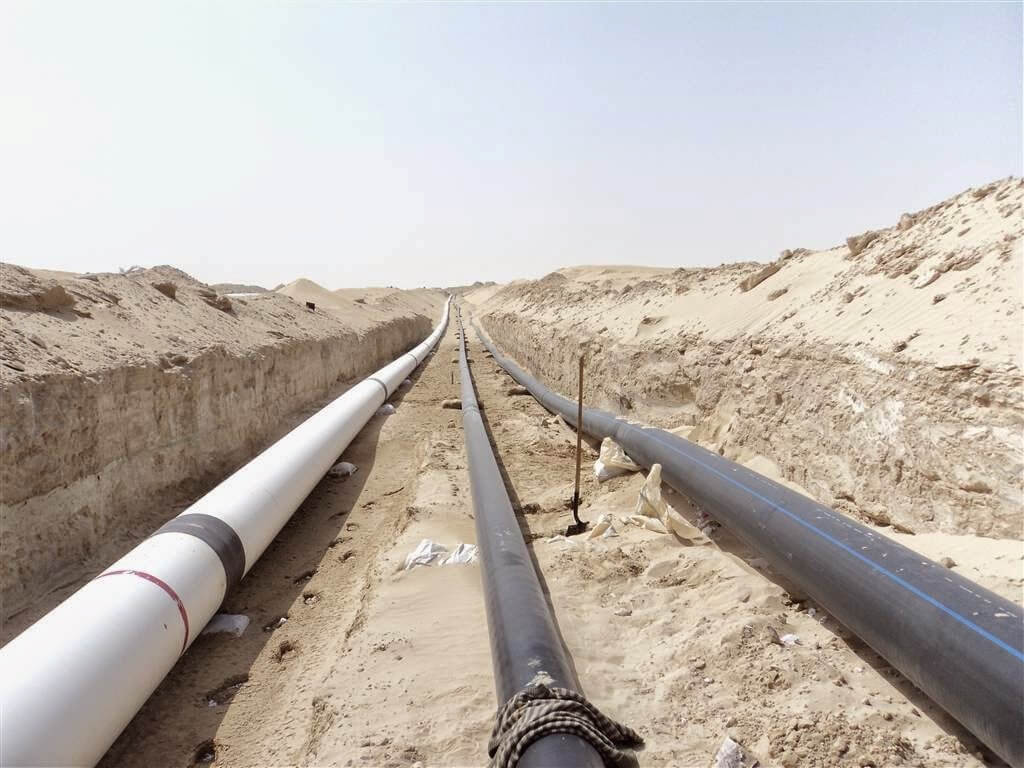
What is the working principle of the natural gas distribution system?
Natural gas pipelines are the lifeline of oil and gas companies and travel thousands of miles carrying oil from the source to the consumer.
In this article, we will explore the question of how the natural gas pipeline distribution system works.
The entire gas pipeline system
The entire gas pipeline system is divided into three parts.
First, the pipelines that transport raw natural gas from wellheads to processing facilities are usually small in diameter and are called the low-pressure natural gas pipeline gathering system.
From these refineries and processing facilities, gas transmission pipelines carry the products to city gate stations, from where distribution lines deliver gas to residential and commercial consumers.
Hydrogen transportation through pipelines
Gaseous hydrogen is one of the products of the oil and natural gas industry.
Extensive gas pipeline networks are needed to deliver it to large-scale consumers of hydrogen gas.
Building new pipelines can be very expensive, so companies are trying to transport gaseous hydrogen using existing pipelines.
This creates some technical challenges.
Hydrogen tends to make pipeline steel brittle over time.
Effective and inexpensive hydrogen compression technology is needed for proper gas transmission, and safety must be ensured by managing leaks and permeability.
Hydrogen blending in natural gas pipelines
One of the solutions to these challenges is Fiber Reinforced Polymer (FRP) pipelines.
This provides a strong and safe pipeline and is approximately 20% lower in installation cost.
In addition, FRP pipelines are available in longer installations, which reduces the overall cost of welding work along a certain pipeline length.
Another applied solution involves using existing natural gas pipelines to transport a mixture of hydrogen and natural gas.
This mixture usually consists of approximately 15% hydrogen and requires only minor pipeline infrastructure adaptations.
Pipeline components
All gas pipeline operations include compressor stations, pipelines, valves, and metering stations.
Compressor stations provide the energy to push gas through pipelines at the required pressure and flow rate.
The length of this pipeline can vary between forty and one hundred miles.
Metering stations perform the function of monitoring gas flow through pipelines.
Valves are also important components in the pipeline system.
They mainly help regulate and restrict flow when repair and maintenance work is carried out on a certain section of the pipeline.
Desulfurization for fuel cells
Fuel cells help produce clean and efficient energy.
They do this by generating electrical energy using hydrogen or synthesis gas.
However, the gas used in fuel cells must be clean and free from contaminants such as sulfur.
Sulfur exists in natural gas in forms such as hydrogen sulfide, sulfur oxides, carbonyl sulfide, etc.
Gasoline desulfurization can also be carried out through reactive adsorption or passive absorption in the gas phase.
Desulfurization is the process in which these sulfur compounds are removed from the fuel for use in fuel cells so that clean energy can be provided.
The role of fuel cells and hydrogen in stationary applications
Stationary fuel cells provide energy to homes, businesses, and even vehicles.
Also, these cells generate electricity instead of combustion and are therefore preferred as an important source of clean energy.
They also benefit from supplying energy on-site and directly to consumers; there is no control loss over a long transmission network.
They also produce less carbon dioxide.
As a result, more and more utility companies are using stationary fuel cells to achieve environmental compliance.
Gas transmission
Optimal gas transmission over long distances from production units to consumers is one of the main parameters affecting the safety and efficiency of oil and gas companies.
Steady-state or unsteady-state conditions
Companies measure and monitor this gas transmission through detailed tracking of flow in pipelines.
When the upstream and downstream pressure and gas flow rate remain stable and constant, this is called a steady state.
However, when this is not the case and these indicators fluctuate, it is considered an unsteady state.
Therefore, companies try to manage compressors to create optimal pressure and flow without consuming too much energy.
Transient flow in gas transmission pipelines
An unsteady flow condition is also known as transient flow, where velocity and pressure change over time.
This may occur due to operational interventions such as open or closed valves, starting or stopping pumps, or failure to achieve optimal compressor pressure.
In contrast, a steady state helps companies achieve optimal gas transmission metrics for efficiency and savings.
Pipeline economics
Pipeline economics are determined by various factors.
These include gas supply and production costs, gas sales volumes and prices, as well as pipeline operating costs.
Therefore, companies must balance several parameters to achieve economic efficiency.
For example, delivering the maximum possible amount of gas in the shortest possible time may seem beneficial.
However, this can come with very high costs because compressors consume a great deal of energy to do this.
In other words, the economic gain of faster gas delivery to consumers is offset by high transmission costs.
Optimization in natural gas network planning
This, along with several other factors, makes natural gas pipeline distribution system planning highly complex and challenging.
It includes several fields such as engineering, financial planning, risk analysis, environmental factors, operational research, technology, regulatory compliance, and more.
Good natural gas network planning requires consideration of all infrastructure, processes, systems, materials, storage, transportation, and people involved.
Underground sensing strategies for assessing the health of buried pipelines
Pipeline management involves strict and regular monitoring to ensure the underground health of the system.
Risks such as Permanent Ground Displacement (PGD), often caused by landslides or earthquakes, can create serious problems and hazards.
Other defects may result from leaks, corrosion, wear, or rust.
Companies use monitoring systems installed inside and around pipelines to track infrastructure health.
Wireless telemetry using wireless sensors is also used to improve the effectiveness of PGD monitoring and reduce costs.
Other methods include monitoring joint rotations using potentiometers and damage assessment using acoustic emission and conductive surface sensors, among others.
In this article, we reviewed the natural gas pipeline system, its components, and some important elements involved in the natural gas distribution system.
As we have seen, several complex processes must come together to ensure the smooth management of this vast natural gas pipeline network.
Partners