Innovations
Gas Cabinets and Distribution Systems Information
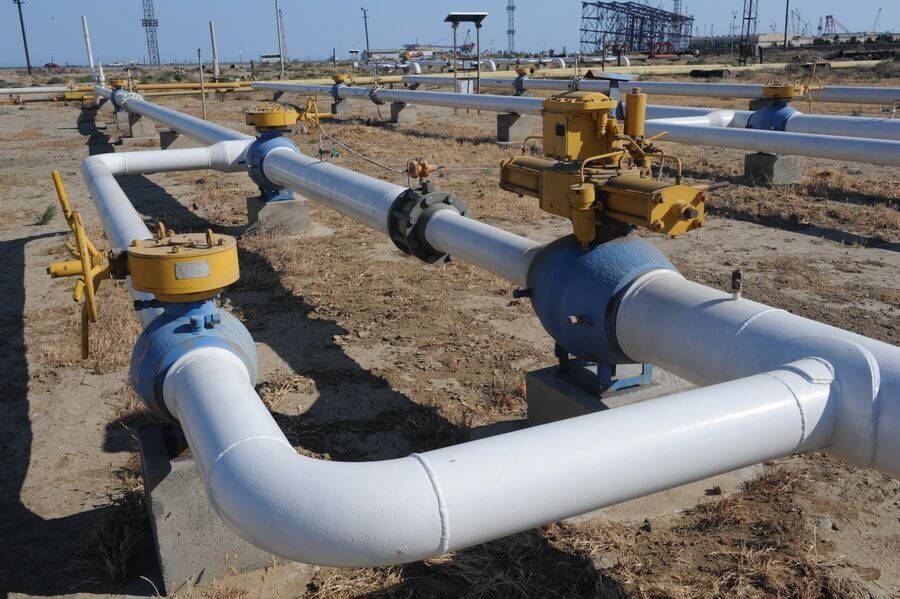
Gas cabinets and distribution systems
Gas cabinets and distribution systems are designed to supply bulk and special gases to process equipment.
These systems are manufactured based on the type and nature of the gas they are intended to deliver and may include evaporators, gas cabinets, gas manifolds, mass flow regulators, valves, pressure sensors, and associated connecting pipelines.
The gas distribution piping system must have high-quality internal surfaces to ensure that the gas is not contaminated by particles coming from the system.
Distribution systems are designed for safety and reliability.
Safety is especially important when dealing with high pressures and hazardous gases (for example, NH3, HCl, and SiH4) that may cause harm to equipment or personnel.
Reliability is critical to ensure successful gas delivery in critical applications.
Composition of a gas cabinet
At the most basic level, a standard gas cabinet consists of a chamber with a panel or door, one or more cylinders with pressure regulators, a manifold, valves, and piping.
Valves, pipes, and fittings are connected using tapered threads to ensure gas-tight sealing.
Additional components may include purge units and pressure switches.
Purge units consist of an additional inert gas cylinder installed to provide a convenient means of purging the regulator or the entire delivery system before and after use.
Pressure switches are used to activate automated functions (such as valve control or emergency shutdown) based on system pressure levels.
Gas cabinets may operate in parallel or in series depending on the design of the manifold used for gas delivery.
In series, the manifold circuit is designed so that pressure is transferred from one valve to another.
In contrast, in parallel systems, all inlet ports share a common pressure supply.
Types
Gas cabinets are gas storage systems designed to contain and ventilate leaking gas.
They also typically house manifolds and gas control systems for distribution applications.
Gas cabinets differ based on the level of automation of the delivery system, which is often related to the type of gas being handled.
Manual gas cabinets — all functions in these systems are manually controlled by the user.
These are typically used for inert, non-toxic, and non-reactive gases where no additional gas isolation safety factors are required.
Semi-automatic gas cabinets — these systems include sensors that automatically activate safety functions when leaks or abnormal pressure conditions are detected, while some controls remain manual.
They are used for less reactive or toxic gases where additional safety isolation measures are required.
Fully automatic gas cabinets — these systems are designed to monitor a large number of process sensors and inputs; all functions including gas delivery and purging/cleaning can be automated and controlled by a PLC controller.
They are used for toxic, corrosive, and reactive gases where gas isolation safety requirements are critical.
Automatic changeover gas cabinets — these systems consist of multiple cylinders and are designed for continuous gas flow during changeover and purge cycles.
They are used in applications requiring a stable flow or where a drop in delivery pressure could negatively affect equipment performance.
Materials
The materials used in the construction of gas cabinets are an important part of proper system selection.
The materials used for the enclosure and external parts must have sufficient structural strength, while gas-handling components must be compatible with the operating medium, temperature requirements, and pressure ratings to prevent leakage, rupture, or contamination.
Aluminum — a lightweight and sufficiently corrosion-resistant metal, usually anodized to increase corrosion and wear resistance.
Aluminum can be used for pipes or fittings in low-pressure applications with higher environmental temperatures or moderately corrosive gases.
Copper — a soft, ductile metal with low hardness and excellent corrosion resistance.
Copper is widely used in pipes and tubing due to its inertness and corrosion resistance.
Plastic — any of a number of high molecular weight thermoplastic or thermoset polymers.
Different grades (such as nylon, acetal, and polycarbonate) have different properties, but most are highly resistant to chemical attack and corrosion.
Steel — a general-purpose industrial metal with high physical strength and rigidity.
Steel is typically coated or treated to improve corrosion resistance properties.
Stainless steel — a high-alloy steel with high chemical and corrosion resistance, most commonly used for manufacturing gas handling components in high-pressure distribution systems.
Partners